

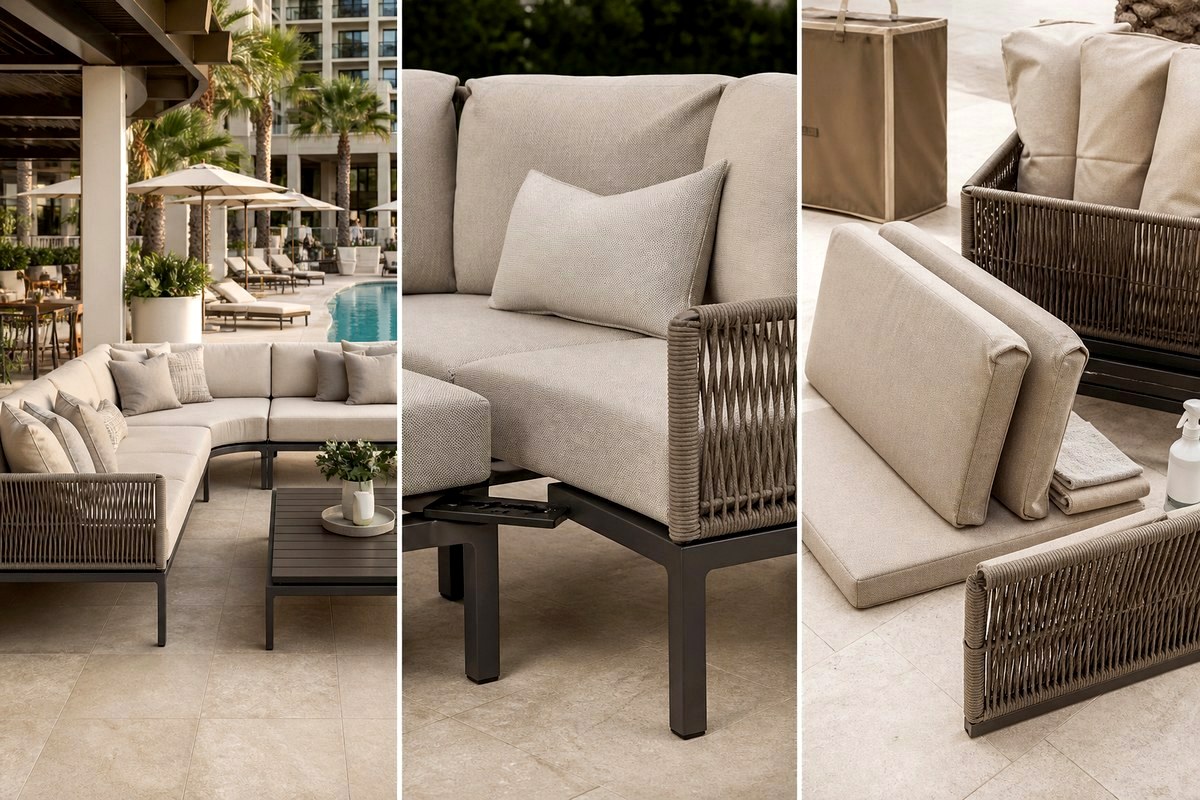
Outdoor lounge chairs are relaxed outdoor seats or recliners designed for pool decks, resort terraces, villas, balconies, hospitality patios, and residential garden spaces. For distributors, hotel buyers, designers, and project purchasers in Europe and North America, the right specification compares recline angle, seat depth, arm clearance, frame material, cushion system, UV and rain exposure, stacking, cleaning, carton packing, spare parts, and reorder codes.
Key Takeaways
Outdoor lounge chairs should be chosen by service zone, comfort posture, staff handling, weather exposure, and cleaning routine, not only by style.
Poolside, coastal, rooftop, balcony, and garden areas may need different frame, fabric, cushion, and glide choices.
Hospitality buyers should test recline comfort, arm height, cushion tie-downs, floor glides, and stacking before ordering a full project quantity.
Cushion care and fabric replacement should be included in the RFQ because lounge seating receives sun, rain, sunscreen, and frequent guest contact.
Reorder codes, spare glides, replacement covers, and carton labels protect the buyer when a resort or distributor needs matching pieces later.
Table Of Contents
Start with the hospitality or terrace service routine
Test recline angle, seat depth, and arm clearance
Match frame, cushion, fabric, and glides to weather exposure
Plan cleaning, stacking, storage, and carton packing
Build an outdoor lounge chair RFQ for project reorders
What Outdoor Lounge Chairs Means For Buyers
Outdoor lounge chairs include chaise lounges, reclining chairs, deep lounge seats, pool chairs, adjustable sun loungers, and relaxed patio seats built for outdoor rest. They differ from dining chairs because the posture is longer, lower, and more comfort-driven, so ergonomics and cushion behavior become major procurement decisions.
The product category is common in hospitality and residential projects, but the correct specification depends on how the chair is used. A pool deck chaise, a rooftop lounge chair, a balcony recliner, and a garden deep seat may share outdoor materials while needing different weight, cushion, stacking, and cleaning rules.
Outdoor Furniture buyers should treat lounge chairs as service assets. The first order should already consider guest comfort, staff movement, weather exposure, cushion storage, replacement covers, spare glides, carton labels, and reorder continuity.
Define The Service Zone Before Choosing Outdoor Lounge Chairs
The service zone decides the chair more than the catalog page. Pool decks need wet-use thinking, towel routines, sunscreen cleaning, and stable glides. Resort terraces may need a premium silhouette with durable cushions. Apartment balconies may need lighter pieces that do not block doors. A distributor showroom may need a family of lounge chairs that can be reordered consistently.
Buyers should draw the layout before confirming quantity. Lounge chairs need more footprint than dining chairs because guests recline, staff walk between pieces, and side tables or umbrellas may be added later. A dense layout can make an attractive chair feel uncomfortable in daily operation.
Hospitality projects also need zone labels. Pool A, rooftop bar, villa terrace, spa garden, and guest-room balcony may receive related models but different cushions, glides, or stackability. Labeling these zones in the RFQ helps the supplier prepare practical quotations.
Outdoor lounge chair zones to define
| Service zone | Chair requirement | Procurement note |
|---|---|---|
| Pool deck | Wet-use comfort, UV fabric, stable glides | Plan cushion drying and sunscreen cleaning |
| Resort terrace | Premium posture and coordinated side tables | Balance comfort with staff movement |
| Villa garden | Relaxed seating with weather-ready frame | Confirm cover and storage routine |
| Balcony program | Compact depth and lighter handling | Check door swing and railing clearance |
| Distributor showroom | Repeatable models and sample cushions | Keep reorder codes and fabric cards |
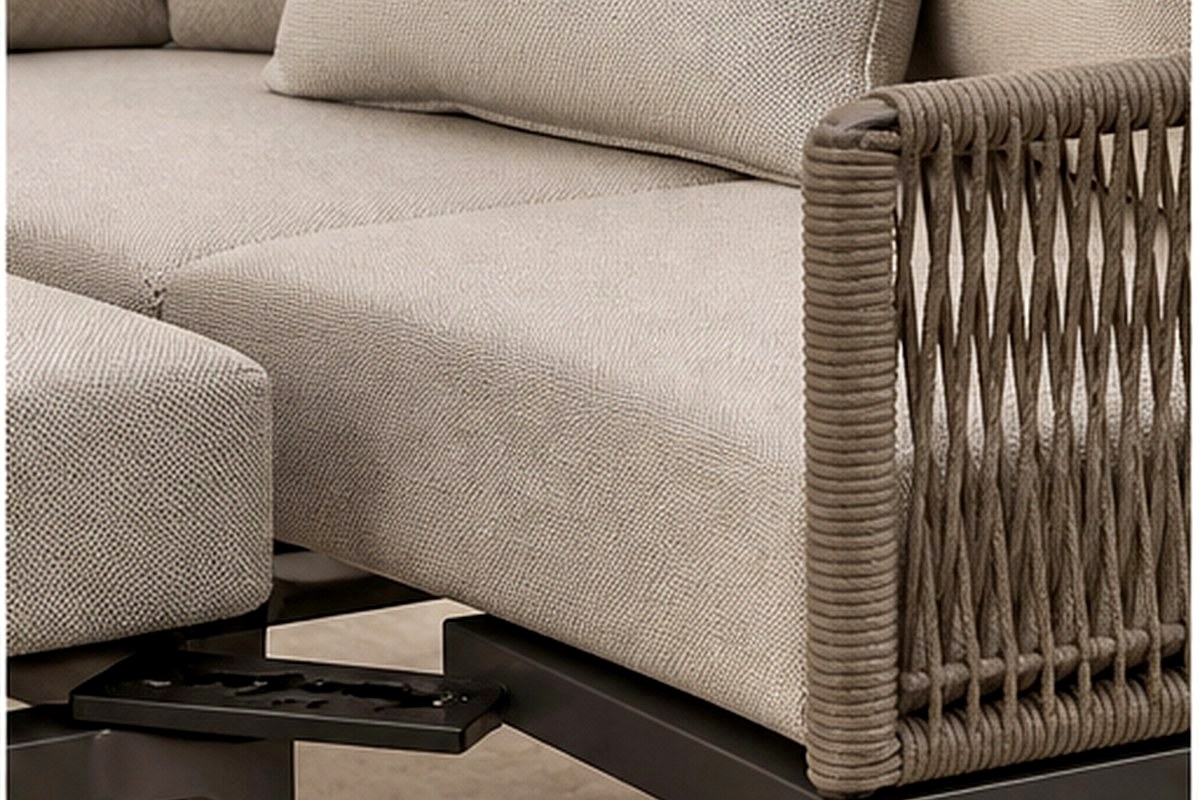
Test Recline Angle, Seat Depth, Arm Height, And Cushion Support
Outdoor lounge chairs are judged by the body, not only the eye. Recline angle, seat depth, back height, arm clearance, cushion thickness, and edge softness should be tested by the buyer or staff. A chair can look premium in photography and still feel awkward when a guest sits for an hour.
Arm height and side clearance affect service. Guests need to enter and exit comfortably, staff need to move cushions, and adjacent tables should not collide with chair arms. If the chair is adjustable, the mechanism should feel stable at each recline position and simple enough for guests to use without instruction.
Cushion support should match the service model. Loose cushions give comfort and easier replacement, but they require storage and cleaning rules. Integrated slings or woven seats reduce cushion handling, yet they may feel firmer and need careful frame and weave quality control.
Ergonomic checks for lounge seating
| Comfort point | Test method | Buyer decision |
|---|---|---|
| Recline angle | Sit, recline, and rise from the sample | Choose relaxed, adjustable, or fixed posture |
| Seat depth | Check leg support and entry comfort | Avoid overly deep seats for compact zones |
| Arm clearance | Test side table and walking space | Prevent crowding on terraces |
| Cushion thickness | Compress and inspect recovery | Balance comfort with drying routine |
| Adjustment hardware | Operate all positions repeatedly | Confirm stability and guest-friendly use |
Match Frame, Fabric, Cushion, And Floor Glides To Exposure
Weather exposure changes material priorities. Poolside chlorine, coastal salt air, rooftop wind, strong UV, shaded gardens, and rainy climates all stress outdoor lounge chairs differently. The RFQ should name the exposure zone so the supplier can recommend frame, finish, fabric, foam, and glide options responsibly.
Frame choices may include aluminum, steel with suitable finish, teak, rope, wicker, or mixed materials. Each has a different weight, maintenance feel, and visual position. Buyers should avoid unsupported promises such as completely waterproof comfort cushions; outdoor textiles still need drying, ventilation, and care rules.
Floor glides and feet are small but important. They protect tile, decking, stone, and pool surrounds, and they influence noise when staff move chairs. Spare glides should be included in hospitality orders because they wear faster than most visible frame parts.
Exposure-based specification for outdoor lounge chairs
| Exposure condition | Specification focus | Maintenance record |
|---|---|---|
| Poolside sun and splash | UV fabric, quick-dry cushion plan, stable glides | Record cleaning for sunscreen and moisture |
| Coastal terrace | Corrosion-aware hardware and breathable cushion storage | Inspect frames and fasteners regularly |
| Rooftop wind | Weight, footprint, and storage plan | Confirm staff movement rules |
| Shaded garden | Mildew-aware fabric and airflow | Avoid damp cushion storage |
| Showroom or distributor stock | Repeatable finish and fabric codes | Keep cards for future reorder |
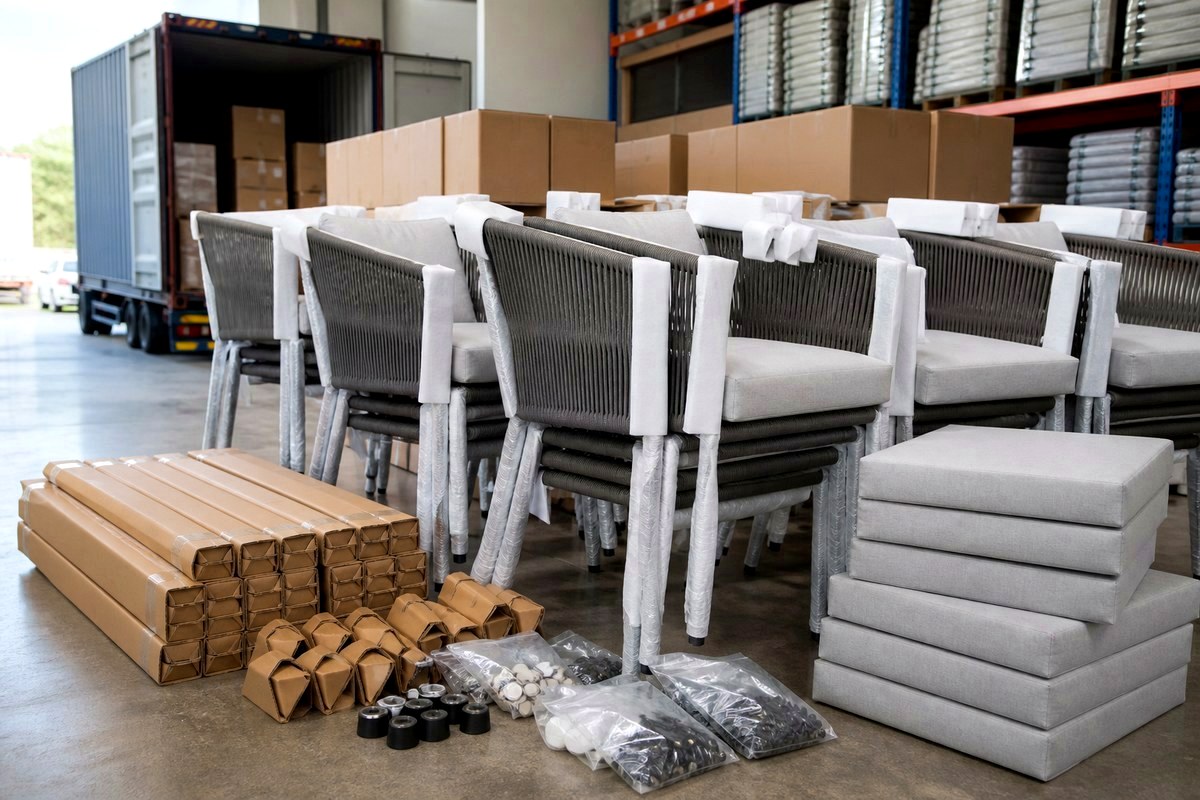
Plan Cleaning, Stacking, Storage, And Reorder Continuity
Outdoor lounge chairs live through repeated handling. Staff move them for cleaning, storms, events, pool service, and seasonal storage. The buyer should know whether the model stacks, nests, folds, or needs dedicated storage racks. A heavy non-stacking chair can be acceptable in a villa but difficult for a large hotel pool deck.
Cleaning routines should be realistic. Cushion covers, woven surfaces, frame corners, adjustment hardware, and floor glides collect different types of dirt. The supplier should provide care guidance that staff can actually follow rather than broad marketing language.
Reorder continuity matters for resorts and distributors. Frame finish, fabric code, cushion thickness, glide type, carton count, and model name should be recorded. Without those details, a second purchase may look close in photos but differ when placed next to the original chairs.
Operations and reorder planning
| Operation item | Project question | Record to keep |
|---|---|---|
| Stacking or storage | Can staff move chairs safely and quickly? | Stack count, weight, and storage footprint |
| Cushion care | Are covers removable or replaceable? | Fabric code, foam note, and washing guidance |
| Cleaning routine | What surfaces collect sunscreen, dust, or rain marks? | Approved cleaning method |
| Spare parts | Which glides, wheels, covers, or bolts wear first? | Part codes and spare quantity |
| Reorder program | Will the same model be purchased next season? | Model, finish, fabric, and carton codes |
Project Scenarios For Outdoor Lounge Chairs
A resort pool deck may choose adjustable chaise-style outdoor lounge chairs with UV-aware fabric and spare glides, while a rooftop lounge may prefer heavier frames that staff can secure during wind events.
A villa project can prioritize comfort and visual warmth, but it still needs a cushion storage rule. A beautiful cushion becomes a maintenance complaint if it stays damp in shaded garden corners.
A distributor planning seasonal inventory should keep model, fabric, finish, and carton codes visible. Reorder continuity lets them support repeat customers without changing the showroom story every season.
A restaurant terrace may need lounge chairs near low tables rather than full recliners. Seat height, service aisle, and staff cleaning routine decide whether the chair supports the venue or blocks service.
Common Mistakes To Avoid With Outdoor Lounge Chairs
Choosing lounge chairs by photo without testing recline comfort and staff handling.
Using the same chair for pool, rooftop, balcony, and garden zones without checking exposure differences.
Ignoring cushion drying, cleaning, and storage rules until after delivery.
Forgetting spare glides, covers, bolts, or reorder codes for hospitality maintenance.
Packing a large project order without zone labels, carton counts, and replacement part records.
Buyer Notes For Outdoor Lounge Chair RFQs
A complete RFQ includes service zone, layout quantity, chair type, recline requirement, frame preference, cushion and fabric direction, exposure conditions, stacking or storage need, cleaning routine, spare parts, packaging, and destination.
Buyers should ask for sample testing when the order supports hospitality use. Staff should move, clean, recline, and store the sample because those actions will repeat long after the purchasing decision is finished.
For distributors, the inquiry should include reorder expectations. If the buyer plans seasonal sales, model continuity, fabric cards, and replacement cover availability can be more valuable than a one-time low price.
Approval File Before Ordering Outdoor Lounge Chairs
The approval file should show chair model, frame finish, fabric code, cushion construction, recline mechanism, glide type, carton packing, zone label, spare part list, and care guidance. This file becomes the reference for receiving and reorder planning.
For poolside and coastal projects, the approval should include exposure notes and cleaning expectations. A supplier can recommend better if the buyer states sun level, salt air, rain, chlorine splash, and storage conditions.
If the project mixes dining chairs, sofas, side tables, and lounge chairs, the sample board should compare finish families together. Outdoor areas look more controlled when frame tones and fabrics are coordinated across categories.
Pre-Shipment Checks For Outdoor Lounge Chairs
Before shipment, review frame finish, recline mechanism, cushion fit, fabric code, glides, cartons, spare parts, and packing photos. Large chairs should be protected from rubbing, pressure marks, and frame scratches during export handling.
A sample or production photo should show the chair from front, side, reclined, and stacked or folded if applicable. Side photos reveal seat depth, arm height, and cushion thickness better than a beauty image.
Carton labels should identify model, finish, fabric, zone, and quantity. This keeps receiving practical when a project contains multiple outdoor furniture types.
Receiving And Handover Notes For Outdoor Lounge Chairs
At receiving, count chairs by zone, check cushion codes, inspect frame finish, confirm glides, and separate spare parts before distributing items across the property. Missing small parts are easier to solve before the chairs are scattered.
During handover, give staff the cleaning routine, stacking limits, cushion storage rules, and spare-part file. Outdoor lounge chairs are operational furniture, so daily handling matters.
After the first service period, record guest comfort, cleaning effort, glide wear, cushion drying, and reorder needs. This feedback helps refine the next purchase while keeping the same visual family.
Quote Review For Outdoor Lounge Chairs Buyers
Quote comparison should separate frame, cushion, fabric, recline hardware, glides, cover options, spare parts, carton packing, and sample cost. A chair without replacement cover or glide data may be weaker for hospitality use.
Freight review should consider whether chairs ship stacked, assembled, folded, or knocked down. Buyers should understand carton volume, cushion packing, and how staff will unload and sort the order.
Final purchase review should match every lounge chair to a zone, fabric code, frame finish, and spare part plan. This reduces confusion when the property opens or when a distributor reorders later.
Sample Timing And Reorder Records For Outdoor Lounge Chairs
Sample timing for outdoor lounge chairs should include staff handling, not only guest sitting. The team should move the chair, lift or stack it, remove cushions, wipe the frame, adjust the back if applicable, and check whether the chair leaves marks on the floor surface.
Operations planning should define where cushions go during rain, cleaning, closing hours, and off-season storage. Even strong outdoor fabrics last longer when buyers give staff a realistic routine instead of relying on vague weather-resistant wording.
Reorder planning should preserve the complete product recipe: model code, frame finish, weave or sling color, cushion fabric, foam note, glide type, carton count, and spare-part kit. This lets a resort expand a pool deck or a distributor refill stock without changing the look halfway through a program.
For hospitality openings, buyers should stage the chairs by zone during receiving. Poolside, spa garden, rooftop, and balcony quantities can be similar, but the wrong cushion or glide in one zone can create service problems before guests ever sit down.
Distributor orders should also record which images, samples, and fabric cards were shown to customers. When the next container is planned, the sales team can compare current demand with the exact outdoor lounge chairs that were sampled in the previous season.
A resort buyer should schedule a short review after the first weeks of use. Staff feedback on cushion drying, chair weight, glide wear, and guest movement can guide the next reorder before the property commits to a larger expansion.
FAQ
What are outdoor lounge chairs used for?
Outdoor lounge chairs are used for relaxed seating on pool decks, resort terraces, villas, balconies, patios, gardens, and hospitality areas where guests sit or recline for longer periods.
How should buyers choose outdoor lounge chair materials?
Buyers should choose materials by weather exposure, guest comfort, cleaning routine, staff handling, cushion care, frame durability, and whether spare parts can be reordered.
Are outdoor lounge chair cushions waterproof?
Outdoor lounge chair cushions are usually weather-resistant rather than fully waterproof, so buyers should plan drying, ventilation, storage, cleaning, and replacement cover options.
Should outdoor lounge chairs stack?
Stacking is useful for hotels, pool decks, and seasonal storage, but buyers should test stack height, frame protection, staff weight handling, and whether cushions must be removed first.
What spare parts matter for outdoor lounge chairs?
Common spare parts include glides, wheels, cushion covers, bolts, adjustment hardware, feet, and fabric records, depending on the chair design and service environment.
Which project notes help suppliers quote lounge seating?
An outdoor lounge chairs inquiry should include service zone, quantity, layout, frame and fabric preference, cushion care, exposure level, stacking need, spare parts, packing, destination, and reorder expectations.
Send An Outdoor Lounge Chairs Inquiry With Service Zones
To request a quote for outdoor lounge chairs, send Outdoor Furniture the project zone, layout quantity, preferred style, recline requirement, frame and fabric direction, cushion policy, exposure conditions, stacking or storage needs, spare parts, destination, and reorder plan.
A complete inquiry lets the supplier recommend chairs that fit the guest experience, staff routine, cleaning workload, packing method, and long-term replacement plan instead of guessing from a product photo.